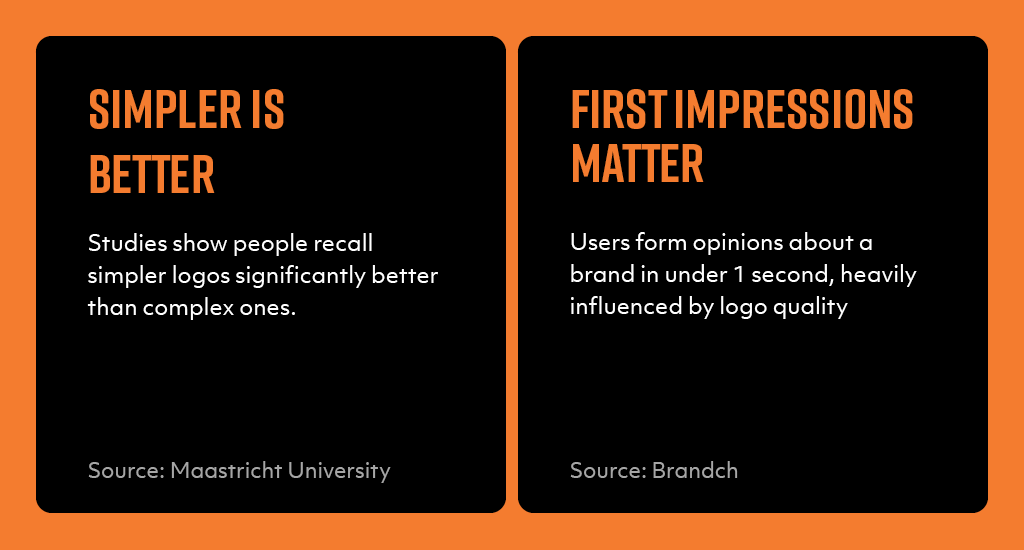
To understand the characteristics of a great logo, we must first consider what it’s for. A logo is basically a visual tool for mentally conditioning the business’ target audience. Businesses need a way to differentiate themselves from their competitors and do this through branding and unique stylisation of their packaging, stationery, advertisements and the key messages that they offer. A logo is a unique visual form that represents the ownership of a particular good or service and is most likely the first thing that customers encounter when dealing with a business.
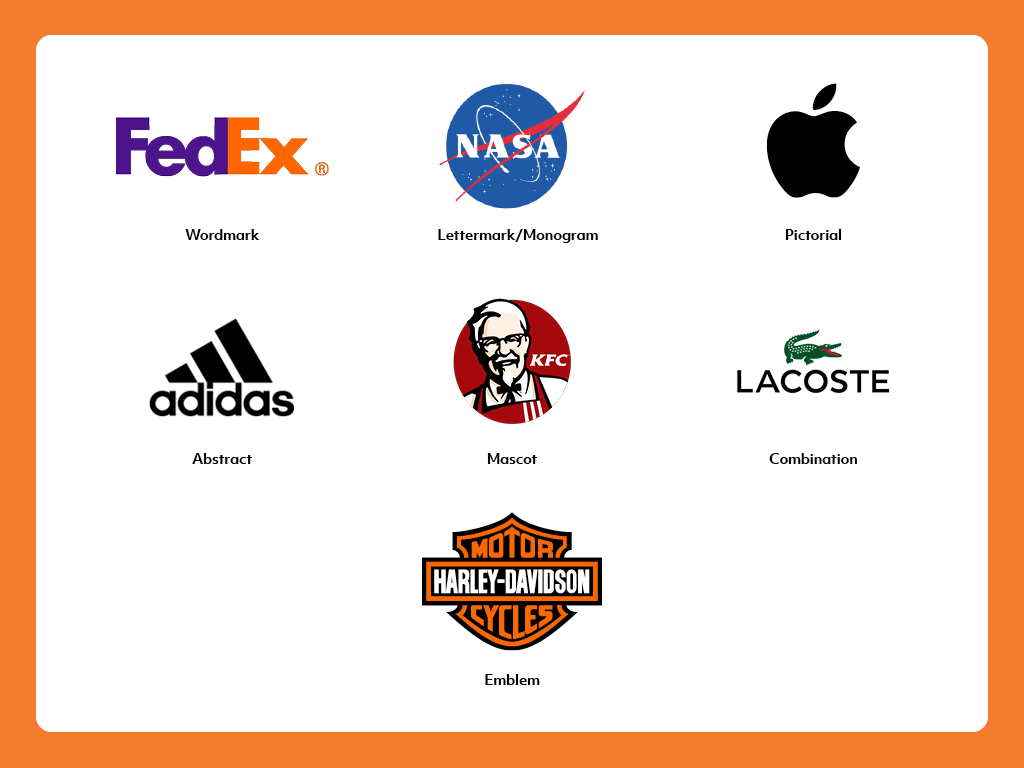
There are 7 types of logo design, they are as follows:
Wordmark
A distinct text-only and sometimes typographically treated name of a company, product, or institution
Lettermark/Monogram
It is a type only logo made entirely from letters, usually a company or brand’s initials. The design can vary from being a simple text-only design to a graphically treated design.
Pictorial
A pictorial logo is an icon or graphic-based logo such as a checkmark, bird, shell, etc. It usually is a graphic that is a literal representation of the company’s name or industry but can also be something more abstract.
Abstract
An abstract logo is similar to a pictorial logo with the difference being that the icon is geometric and less literal with its meaning.
Mascot
It is a design that features a distinctive character, often a person, animal, or fictional figure. Mascots are the faces of the brand and represents their personality.
Combination
A combination logo is a type of design that combines two elements into one cohesive design, typically it is text plus a symbol or icon. It is also more flexible in its configuration and use, such as using its original design, using its just the icon, and/or just using its wordmark.
Emblem
It is a logo where text and imagery or both are enclosed within a single, unified shape. Instead of elements floating freely, everything is locked together inside a badge, seal, or crest-like form.
Choosing which type of logo for a business comes with a lot of factors that need to be considered such as the type of industry the business is in, its personality, the name, where people will encounter the logo, and what best suits the brand.
Simple
Many of the most effective and iconic logos in history are very simple. From Apple’s iconic design to the golden arches of McDonald’s, simple logos are easy to remember and are recognisable. Simplicity is an important element for logo design because people only focus on a logo for a very short time and it should express the brand’s personality effectively. It is the first impression that people get when they encounter a brand and conditions them to think of the brand in thinking and buying situations.
Memorable
Another key element of a good logo is that it is memorable, even from the first time you see it. One of the goals of a logo is creating a connection with the audience and generating engagement with your brand. When the audience can easily recall your logo and brand, they are more likely to connect with the company. Logos that are memorable and produce a good impact are valuable because they help the brand stick in consumers’ minds.
Distinct
Recall all the unforgettable logos stored in your memory: McDonald’s, Apple, X/Twitter would be some of mine. We remember these kinds of logos because apart from seeing them non-stop, they’re distinct and unforgettable. Good logos stand out from the crowd by being unique, original and memorable. Your logo must attract people at first glance while expressing trust and reliability upon numerous interactions. A distinct logo design calls for a unique concept. Logo design is the combination of graphics and great ideas to achieve the best representation of the brand and keep that representation in the target audience’s mind.
Versatile
A good functional logo should be able to work across a variety of mediums and applications such as print or digital formats. A logo should be identifiable in any scalable size and work in both horizontal and vertical formats. It needs to be flexible in terms of colour so that the integrity of the logo is not compromised when converted to either black or white. This versatility in logo design is important because as businesses evolve both in terms of marketing strategy and technology, a good versatile logo will still hold relevant and age gracefully along with the business.
Appropriate
How a logo is positioned should be appropriate depending on the nature of the business. An example would be designing a logo for a child’s daycare. It would be appropriate to have fun, childlike and colourful elements but would not be appropriate for a business such as a car dealer. The logo doesn’t need to show what a business sells or the service it offers. ie. Car brands don’t need to show cars, computer logos don’t need to show computers. The Airbnb logo isn’t a house and Samsung’s logo isn’t a mobile phone or technology. A logo is used basically for identification. All these characteristics are a framework into what makes a good and successful logo. It is up to both the client and designer to collaborate into developing and designing a logo that combines both functionality and design aesthetic, and best represents the business to help consumers remember and identify it.